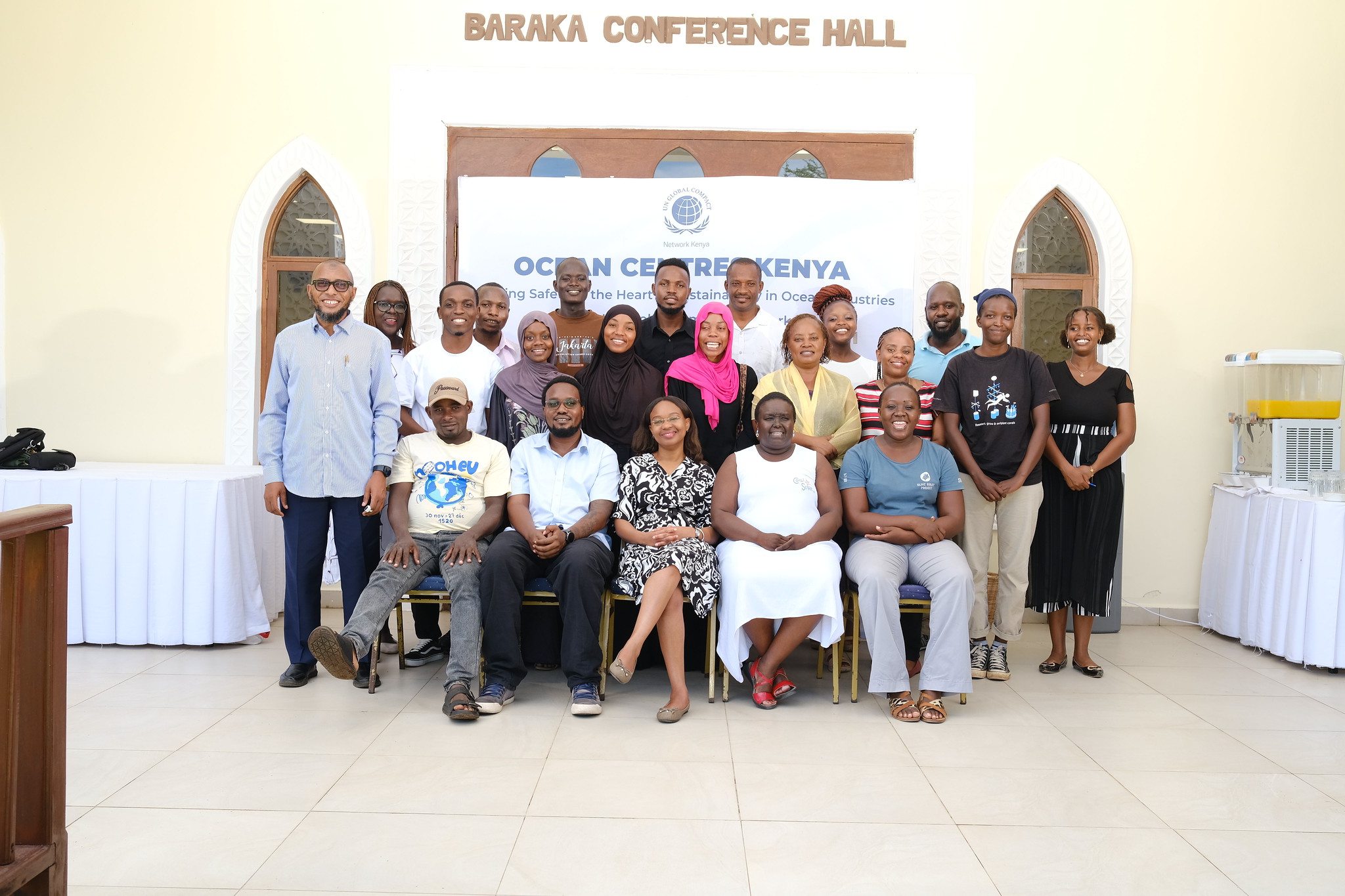
Ocean Centres Kenya has completed its eight-workshop series across the Kenyan coastline, marking an important step in advancing a safer, more sustainable, and inclusive blue economy.
The series culminated in a validation forum held in Diani on 8 April 2026, bringing together stakeholders from across government, business, research institutions, and coastal communities. The forum marked the initiative’s transition into its national reporting phase, where the insights gathered across Mombasa, Kilifi, Lamu, Diani and Kwale will be consolidated into a practical framework for action.
Launched in August 2025 in Mombasa, Ocean Centres Kenya has created a platform for structured dialogue on the future of Kenya’s ocean economy. Its work has focused on strengthening safety, resilience, and sustainability across sectors that are central to coastal livelihoods and national development.
A shared agenda for Kenya’s blue economy
Across the eight workshops, participants examined the risks, opportunities, and practical solutions shaping Kenya’s maritime future. The discussions were anchored on four priority areas: shipping and ports, fishing and aquaculture, offshore renewable energy, and finance and investment.
These areas reflect both the promise and complexity of the blue economy. Ports and shipping are critical to trade and regional competitiveness. Fisheries and aquaculture support livelihoods, food security, and local enterprise. Offshore renewable energy presents new possibilities for clean growth. Finance and investment determine whether solutions can move from concept to scale.
By convening actors across these sectors, Ocean Centres Kenya has helped connect policy conversations with lived experience. Coastal communities, academia, civil society, regulators, financiers, technical experts, and private sector leaders contributed perspectives on what safe and sustainable growth should look like in practice.
Moving from workshops to national reporting
The next phase will focus on consolidating the knowledge generated through the workshop series into a national report.
The report will synthesize stakeholder insights, identify priority risks, and outline recommendations to support stronger coordination across Kenya’s maritime and blue economy sectors. It will also help translate local knowledge into guidance that can inform policy, investment, institutional planning, and future partnerships.
This reporting phase is especially important as Kenya continues to position itself as a leader in ocean governance. With the country expected to play a prominent role in global ocean conversations, including Our Ocean Conference 2026, the work of Ocean Centres Kenya offers a timely contribution rooted in local realities and cross-sector collaboration.
Placing safety at the centre
A key outcome of the workshop series is the recognition that safety must sit at the heart of sustainable blue economy development.
In shipping and ports, safety affects workers, trade efficiency, and operational standards. In fisheries and aquaculture, it shapes the security and dignity of coastal livelihoods. In offshore renewable energy, it is essential to responsible infrastructure development. In finance and investment, it influences risk, confidence, and long-term value creation.
Ocean Centres Kenya is advancing safety as a practical enabler of sustainable growth. This means looking beyond compliance to consider how safer systems can protect people, strengthen ecosystems, attract responsible investment, and build resilience across the maritime economy.
Activating the Safety Committee
To support the national reporting process, Ocean Centres Kenya is establishing a multi-sectoral Safety Committee.
The committee will provide technical input, review emerging recommendations, and help ensure that safety considerations are integrated across the report. It is expected to bring together expertise from key institutions and stakeholder groups, including Kenya Ports Authority, Beach Management Units, private sector ESG leaders, Engineers Board of Kenya, the Directorate of Occupational Safety and Health Services, and the Kenya Institute for Public Policy Research and Analysis.
Each institution brings a distinct lens. Port authorities understand operational realities. BMUs bring the voice of coastal communities and artisanal fishers. Private sector actors contribute investment and ESG perspectives. Technical bodies support infrastructure, safety and standards. Policy and regulatory institutions help align recommendations with national priorities.
Together, these perspectives will strengthen the quality and relevance of the national report.
Building momentum for action
The completion of the eight-workshop series marks a shift in the work of Ocean Centres Kenya. The focus now moves to analysis, validation, and the development of recommendations that can support implementation.
This is where the initiative’s value becomes especially clear. Kenya’s blue economy requires more than ambition. It requires coordination, evidence, trust, and practical tools that respond to the realities of coastal communities and ocean-based industries.
Ocean Centres Kenya is helping build that foundation. By bringing together diverse stakeholders around safety, sustainability, and inclusion, the initiative is contributing to a stronger national conversation on how Kenya can grow its ocean economy responsibly.
The road ahead will require continued collaboration across sectors. It will also require sustained commitment to ensuring that economic opportunity, environmental stewardship, and community well-being advance together.
Ocean Centres Kenya now enters this next phase with a clear mandate: to turn coastal insight into a national blueprint for a safer, more resilient, and inclusive maritime future.