Less than 1% of corporate procurement spend globally reaches women-owned businesses and in Kenya, the figure is estimated at only 3%, according to the International Finance Corporation’s Sourcing2Equal Kenya programme.
For business leaders focused on competitiveness, supply chain resilience, local value creation, and sustainable growth, that gap deserves closer attention.
Women-owned businesses are not absent from the economy. They are producing, supplying, innovating, employing, and sustaining communities. Yet too many remain outside the corporate value chains where scale is built through predictable demand, long-term contracts, supplier development, and access to finance.
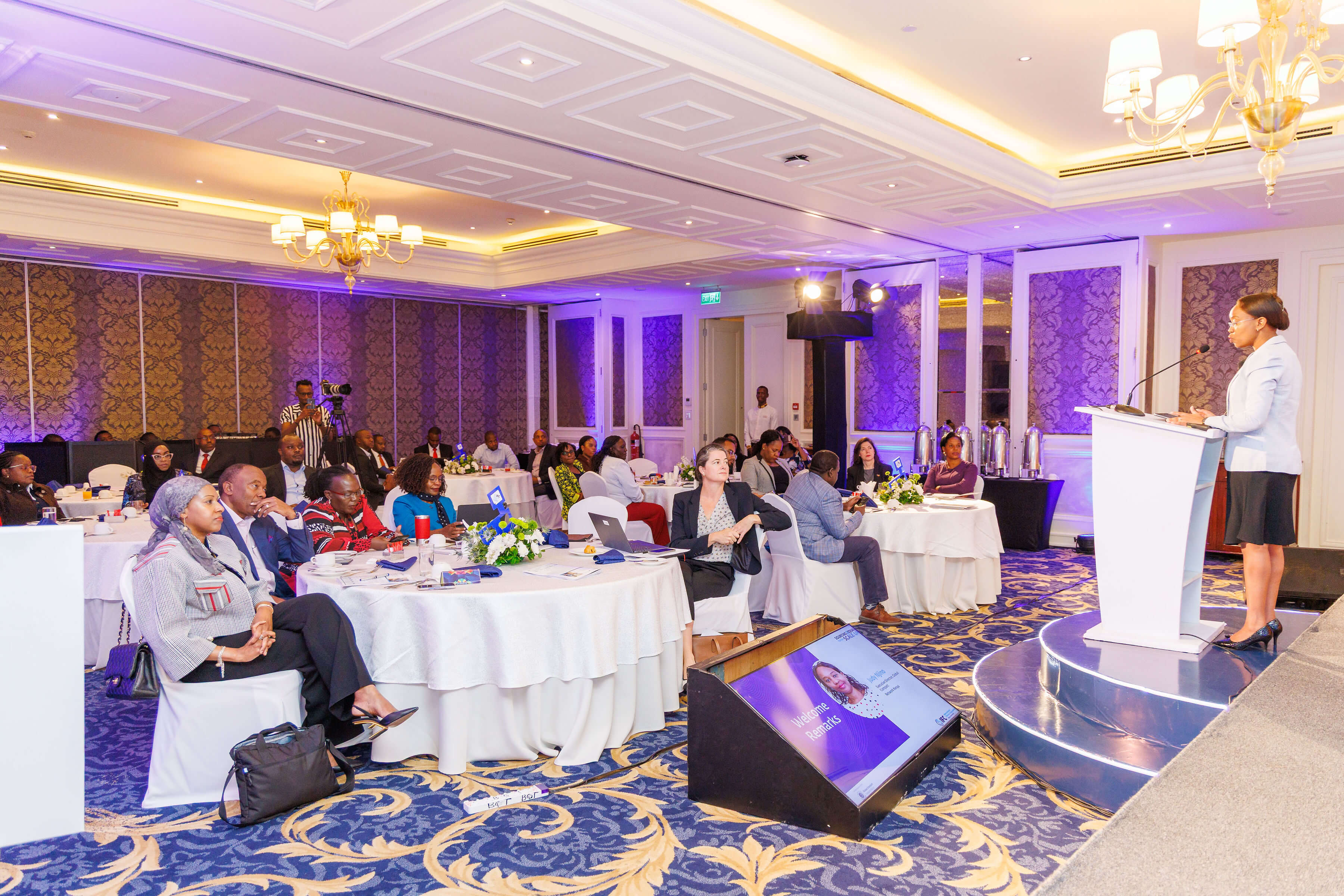
On 7 May 2026, IFC - International Finance Corporation, in partnership with Global Compact Network Kenya convened private sector for the Leaders Dialogue on Inclusive Sourcing, under the Sourcing2Equal Kenya Scale Up Programme.
Moderated by Yvonne Okwara , the Dialogue brought together chief executives, senior procurement and finance leaders, women-owned enterprises, and ecosystem partners to examine a practical business question: How can corporate procurement become a stronger lever for inclusive growth, competitiveness, and resilient supply chains?
Procurement as a business lever
Judy Njino, Executive Director, Global Compact Network Kenya
Opening the Dialogue, Judy Njino , Executive Director, Global Compact Network Kenya, challenged business leaders to move inclusive sourcing beyond familiar sustainability language and into the way companies make commercial decisions.
She noted that businesses are operating in a more demanding environment, shaped by supply chain disruptions, rising operational costs, shifting market expectations, and growing scrutiny around responsible business conduct. In that context, procurement cannot be treated only as a cost-management function.
“Every sourcing decision has implications not only for cost and efficiency, but also for how resilient, innovative, and inclusive supply ecosystems become over time.”
For Judy, the opportunity lies in how companies deliberately build the ecosystems they depend on. A more diverse supplier base can strengthen local linkages, widen access to capable suppliers, reduce concentration risk, and unlock business value that traditional procurement systems often miss.
“Inclusive sourcing is not about lowering standards. It is about expanding opportunity while strengthening competitiveness.”
Through the Sourcing2Equal Kenya Scale Up Programme, the International Finance Corporation and Global Compact Network Kenya are supporting companies to adopt inclusive sourcing strategies, improve access to supply chain finance for women-owned suppliers, and build a stronger pipeline of procurement-ready women-owned SMEs.
Judy invited leaders in the room to consider one practical question: “What is one concrete step your organization can take to move inclusive sourcing from principle to practice in the next twelve months?”
The business case has numbers behind it
Gillian Rogers, Principal Country Officer, Kenya, International Finance Corporation,
Gillian Rogers, Principal Country Officer, Kenya, IFC - International Finance Corporation, placed the discussion within the wider agenda of private sector growth, job creation, and market development.
“When women participate fully in the economy, businesses grow faster, markets innovate, and economies become more resilient.”
She emphasized that women-owned businesses do not only strengthen individual supply chains when they are integrated into corporate value chains. They create jobs, deepen local supply networks, and contribute to more resilient markets.
The Sourcing2Equal Kenya pilot demonstrated what is possible. The initiative reached more than 1,600 women-owned businesses with readiness support and contributed to 345 new contracts, including contracts with Sourcing2Equal corporate buyers and other private sector buyers.
Gillian also challenged one common assumption. “This is not a pipeline problem. Women are in business. They are producing, delivering, and innovating. This is a market access problem.”
That distinction shifts the conversation. The issue is not only whether women-owned businesses are ready. It is also whether corporate procurement systems are designed to find them, onboard them, pay them fairly, finance their growth, and track progress meaningfully.
From pilot learning to market scale
Anne Njambi Kabugi, Global Lead, Inclusive Sourcing, International Finance Corporation
Anne Njambi Kabugi, Global Lead, Inclusive Sourcing at the International Finance Corporation, shared the journey from the Sourcing2Equal Kenya pilot to the Scale Up phase.
The pilot confirmed that women-owned businesses can access corporate contracts when buyer commitment, supplier readiness, and ecosystem support come together. It also revealed the barriers that must now be addressed more deliberately, including supplier identification, internal alignment within corporates, procurement data, access to finance, and business readiness.
She emphasized that scale will require more than individual company action. Corporate demand, supplier capacity, financing, market outreach, and data must be coordinated across the ecosystem.
“We need more contracts. We need more capital extended to this segment. And we need more capacity.”
The Scale Up phase will bring together corporate buyers through an Inclusive Sourcing Network, financial institutions through an Inclusive Supply Chain Finance Community of Practice, and women-owned SMEs through targeted capacity building and procurement readiness support.
Lessons from the market
A fireside chat with corporate and SME CEOs
The fireside chat brought the business case into practical view.
Tom Gitogo , Group Managing Director and Chief Executive Officer, Britam, spoke to the role large institutions can play in making SMEs more procurement-ready and bankable. He pointed to practical levers such as training suppliers on procurement requirements, shortening payment cycles, and breaking large contracts into smaller, accessible opportunities. His contribution reinforced a key point: access to procurement is only meaningful when contract terms allow smaller suppliers to deliver, manage cash flow, and grow.
Mary Ngechu,MBS, Managing Director, Lineplast Group, shared how inclusive sourcing connects directly to manufacturing competitiveness, traceability, and sustainability. In Lineplast’s recycling value chain, many small actors were already present, but remained invisible because they were not formally aggregated, documented, or equipped to meet the traceability and quality standards required by corporate buyers. Her experience showed that inclusive sourcing is not simply about opening procurement opportunities. It also requires companies to invest in supplier visibility, data, quality systems, and capacity building.
Elizabeth Wasunna - Ochwa, Director, Strategic Partnerships at Absa Bank Kenya, reflected on Absa’s own institutional journey. When the bank examined its supplier base, it found that only 6% of its suppliers were women-owned. That internal audit prompted deliberate action, including measurement, supplier training, partnerships, and a review of payment terms. Absa has since moved to about 20% women suppliers, an important step that also shows why companies must begin with honest data before setting ambition.
Jeniffer Wambua, Chief Executive Officer, Harmony Group of Companies Ltd, brought the women-led SME perspective to the center of the conversation. As an entrepreneur in events and production services, she spoke to the importance of visibility, trust and real opportunity. Her message was direct: women-owned businesses are not looking for symbolic inclusion. They need access to contracts, fair terms, timely payment, and the confidence of corporate buyers.
From commitment to practice
The CEO Commitment Charter
The Dialogue also called leaders to move from agreement to implementation. Participants were invited to sign a public commitment charter and identify practical steps their organizations can take over the next twelve months.
The commitments pointed to a wider shift required across business, from chief executives to procurement teams, finance departments, legal teams, business units, and suppliers.
Inclusive sourcing cannot sit in one department. It must be reflected in how companies define suppliers, structure contracts, assess risk, build databases, finance delivery, and measure procurement spend.
Building the ecosystem
Marieme Niang Camara , Senior Investment Officer & Regional Gender Hub Lead, Africa, International Finance Corporation
In the closing remarks, Marieme Niang Camara, Senior Investment Officer & Regional Gender Hub Lead, Africa at the International Finance Corporation, emphasized that the Scale Up phase is about creating a functioning ecosystem where corporate demand, supplier readiness, and access to finance work together.
“The real measure of success is when we see change materialize through more opportunities, more contracts for women entrepreneurs, supply chain finance attached to procurement contracts, and stronger supplier relationships that deliver value for business.”
She called on companies to engage actively in the Sourcing2Equal Kenya Scale Up Programme, institutionalize inclusive sourcing within procurement value chains, and collaborate with peers, financial institutions, and ecosystem partners.
What companies can do now
For business leaders, the opportunity is practical and immediate:
- Audit the current supplier base
- Set measurable inclusive sourcing targets
- Review payment terms for SMEs and especially women owned enterprises
- Break large contracts into accessible opportunities
- Build and maintain supplier databases
- Train procurement teams on inclusive sourcing
- Support supplier readiness and documentation
- Work with financial institutions on supply chain finance
- Track spend with women-owned businesses
- Make commitments public, measurable and accountable
Through its partnership with the International Finance Corporation, Global Compact Network Kenya will continue to convene business leaders, support peer learning, and help translate inclusive sourcing from boardroom commitment into procurement practice.
For United Nations Global Compact participants interested in learning more about the Sourcing2Equal Kenya Scale Up Programme, please contact info@globalcompactkenya.org